Nairobi, Kenya
By Mary Kulundu
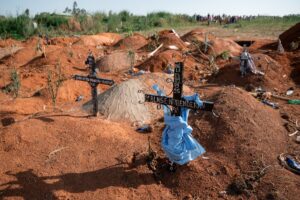
Hundreds of people, mostly women, marched in Nairobi on Monday to protest the high number of murders of women and children in Kenya, with Amnesty International calling it a “national security crisis.”
At least 69 women have been killed in this East African country since early January, according to data compiled by data aggregator Odipo Dev and the media outlet Africa Uncensored.
The Kenyan government has also recorded the disappearance of 10,581 children over the past 16 months, including 1,952 abductions and 173 cases of trafficking.
Dressed in white T-shirts and holding signs reading “Stop Femicide and Pedicide” (the killing of children), the protesters—mostly women—paralyzed downtown Nairobi with chants and cries of anguish, blocking an avenue with a large banner bearing the names of more than 500 victims.
“It’s traumatic; I don’t know if I’m next,” said activist Racheal Mwikali.
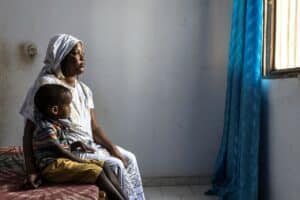
Julie Ochieng showed the obituary of her daughter, Kristabel Anyango, explaining that she was killed at the age of 28 while trying to leave a toxic relationship.
“If you’re tired of them, just let them go. Stop killing women,” she said.
The term “femicide” refers to the killing of women and girls because of their gender, but it is not recognized as a separate crime under Kenyan law.

(Photo by SIMON MAINA / AFP)

(Photo by SIMON MAINA / AFP)

– “A crime in its own right” –
Activists argue that this loophole contributes to cases going undocumented and others “dragging on in the judicial system.”
FIDA Kenya, a women’s rights organization, states that half of the 70 cases it handles each week involve physical and sexual violence committed by partners.
“There are no consequences; they are brushed aside as minor offenses (…) We need serious action and punitive measures,” said protester Njeri Mwangi.
Veronicah Were, an anti-femicide activist from a Nairobi slum, said she personally knew 10 women who had been killed.

(Photo by SIMON MAINA / AFP)


(Photo by SIMON MAINA / AFP)
“I’ve followed these cases, but most end without any follow-up,” lamented Ms. Were. “Femicide should be considered a crime in its own right under our law. That’s how we’ll be able to eradicate it.”
The human rights NGO Amnesty International described the situation as a “national security crisis,” stating that “every delayed response costs lives.”
The year 2024 was the worst on record in Kenya, with an average of 14 women killed each month, according to Odipo Dev and Africa Uncensored.
President William Ruto established a task force on the issue last year. But no further action has been taken, according to anti-femicide activists.
“When will our demands be addressed? The killings continue,” Ms. Were said angrily.
Humaniterre with AFP