Lagos, Nigeria
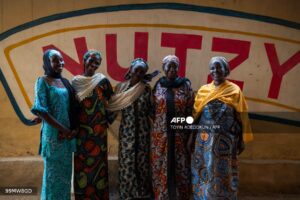
Four women from Chibok, a rural village in northeastern Nigeria, whose daughters were abducted by Boko Haram in 2014, and a former captive of the jihadist group set foot for the first time in two factories in Lagos, the country’s economic capital, their faces lit up with curiosity and pride.
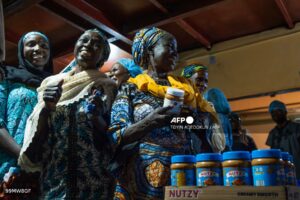
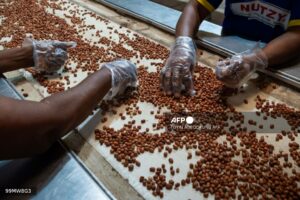
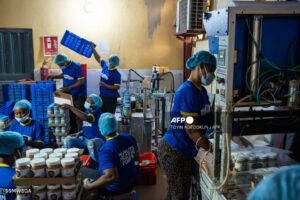
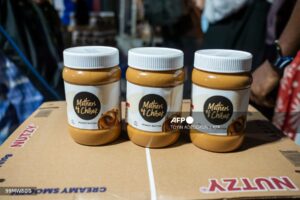
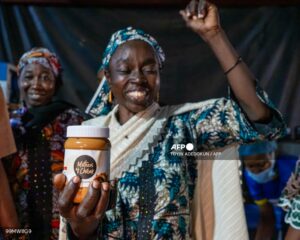
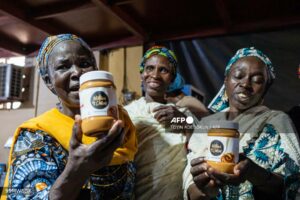
Dressed in colorful traditional attire, they put on hairnets before entering the production area, where the peanuts they grow are processed into peanut butter and other products, marketed under the brand-new “Mothers of Chibok” brand, intended to fund their children’s education.
“If we sit idly by, if we stop sending our children to school and working in our fields, that would amount to accepting what Boko Haram wants: to ban Western education. We do not agree with that,” says Yana Galang, 55, mother of eight children, including Rifkatu, who was abducted at the age of 18 and whom she has never seen again.
“The little money we have, we spend solely on our children’s education, so we can send them to the best schools,” the mother continues.
In 2014, the abduction of 276 schoolgirls in Chibok, Borno State, sparked an international outcry. Twelve years later, about 100 of them have still not been found, leaving their families in constant anguish.
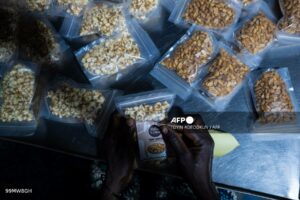
This partnership was supported by Joel Kachi Benson, director of the documentary “Mothers of Chibok,” released in theaters last week, which chronicles the lives of these mothers.
Before the creation of Mothers of Chibok, their harvests were sold unprocessed to middlemen in the village, generating meager and unpredictable incomes. Today, they work has better value, they obtain a stable income, and reach a wider audience.
These women’s peanut production increased from 15 100kg bags to 27 bags between 2024 and 2025.
For Ajrena Foods and Zenfix Nigeria, the initiative is part of a social and economic reconstruction project that could inspire other mothers whose children have also been abducted by Boko Haram, other jihadist groups, or criminal gangs. (Photo by TOYIN ADEDOKUN / AFP)
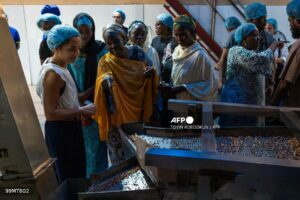
(Photo by TOYIN ADEDOKUN / AFP)
– A Better Future –
In Chibok, a poor farming village where residents rely primarily on growing corn, peanuts, millet, and rice, the threat of attacks and abductions has not gone away.
Boko Haram and its rival, the Islamic State in West Africa (ISWAP), continue to kidnap and terrorize local populations.
In total, nine women from Chibok are collaborating with Zenfix Nigeria, a company that sells peanuts and nut-based products, and Ajrena Foods, the producer of the Nutzy peanut butter brand, which is very popular in Nigeria. This partnership came about thanks to the help of Joel Kachi Benson, director of the documentary “Mothers of Chibok,” which hit theaters last week and chronicles the journey of these mothers.
“The message is clear: evil will never triumph. These women are not broken. They may be in mourning, but they are not broken. All they need is support, collaboration, and encouragement to hold on, to keep hope alive,” explains Joel Kachi Benson, surrounded by these mothers, many of whom do not know if their daughters are still alive.
Before Mothers of Chibok was founded, their crops were sold unprocessed to middlemen in the village, generating low and unpredictable income.
Today, they want to add more value to their work, earn a stable income, and reach a wider audience.
These women’s peanut production increased from 15 100-kg bags to 27 bags between 2024 and 2025.
Maryam Ali Maiyanga, 28, a former high school student who was kidnapped and managed to escape in 2016, gazes for long minutes at the labeled jars and bags. For her, each product symbolizes the promise of a different future for her nine-year-old son, Ali, born during her captivity from a forced marriage to a Boko Haram fighter.
“If he grows up without an education, he risks following in his father’s footsteps,” she confides.
– Inspiring other women –
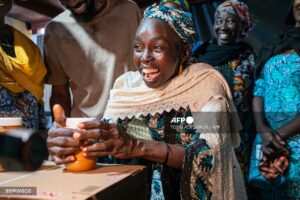
Ruth Kwakwe, 48, is happy to have been able to label some of the products herself during the visit.
For this mother of 10 children, Mothers of Chibok also represents the demand to live in peace in Chibok.
“I have never left Chibok. I am no longer afraid, but even if I were afraid, where would I have gone?” asks Ms. Kwakwe, whose daughter Awa was 17 at the time of the abduction.
For Ajrena Foods and Zenfix Nigeria, the initiative is part of a social and economic reconstruction project that could inspire other mothers whose children have also been abducted by Boko Haram, other jihadist groups, or criminal gangs.
“Our role is to provide them with a way to move past the trauma they have experienced and build a sustainable business for themselves, their children, and their communities,” explains Ajay Ramnani, CEO of Ajrena Foods.
(Photo by TOYIN ADEDOKUN / AFP)
For her part, Taibat Dayo-Amzat, founder of Zenfix Nigeria, is optimistic about the future of this collaboration. “It creates jobs, improves people’s lives, and has a far-reaching impact. It was a true win-win,” she says.
The Mothers of Chibok team hopes that other women will join them soon and even dreams of expanding the brand internationally.
A decade after the abduction of the Chibok schoolgirls, mass kidnappings remain a reality in northern and central Nigeria and have become “a structured and lucrative industry” that generated some $1.66 million (€1.43 million) between July 2024 and June 2025, according to a recent report by SBM Intelligence, a Lagos-based consulting firm.
Humaniterre with AFP