Ruhengeri, Rwanda
Saturday, December 7, 2025
By Moses GAHIGI and Eric RANDOLPH
Photos by Vivien LATOUR
As his comrades died of hunger and thirst around him, Mbale Hafashimana Amos decided to flee the Congolese bush for Rwanda, a country he had always been told would kill him upon arrival.
A Hutu by ethnicity, the 37-year-old was part of a militia active in eastern Democratic Republic of Congo (DRC) called the Democratic Forces for the Liberation of Rwanda (FDLR), originally created by those who fled across the border after committing genocide in Rwanda in 1994.
But the FDLR has suffered this year as an armed group supported by Rwanda, the M23, launched an offensive in the region, which it now controls large parts of.
In April, “the M23 pushed us into a place where we couldn’t find anything to eat,” says Mbale Hafashimana Amos. “I saw more than 150 soldiers die of hunger and dehydration. It was awful.”
Rwanda officially denies supporting the M23, despite repeated accusations from the international community, including the UN.
In September, a UN fact-finding mission reported possible “war crimes” and “crimes against humanity” committed by “all parties,” including the M23 and the FLDR, while thousands of civilians have been killed since the beginning of the year in eastern DRC.

– Existential threat –
But Rwanda is also praised for welcoming defectors from the FDLR. All are Hutus, and many participated in—or were born in the DRC to fathers who participated in—the 1994 genocide, during which up to 800,000 people, mainly Tutsis but also moderate Hutus, were massacred.
“The genocidal ideology is still omnipresent within the FDLR” and is taught to new recruits to train them “against the Rwandan government,” says Mbale Hafashimana Amos.
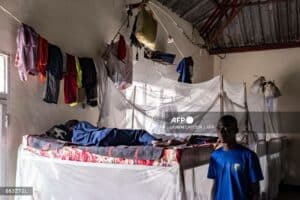
He himself thought he would be shot when he surrendered this year. Instead, he found himself in the Mutobo rehabilitation camp in Rwanda.
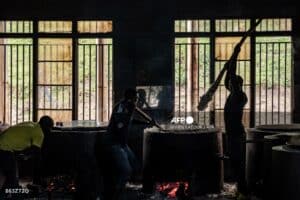
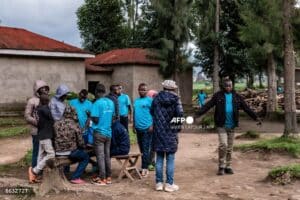
However, the African Great Lakes country is not lenient with the FDLR, which its president, Paul Kagame, describes as “genocidaires” whose very existence poses an existential threat to Rwanda. This threat is downplayed by many experts, who believe that the few thousand fighters serve more as an excuse to invade eastern DRC.
Mr. Kagame, credited with an economic miracle that is clearly visible in the Rwandan capital, is also accused of ruling the country with an iron fist and muzzling all opposition.
But few deny the sincere efforts made under his rule in recent decades in Rwanda to heal the ethnic divisions between Hutus and Tutsis that led to the genocide.
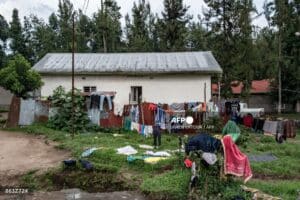
The Rwandan government has granted access to the Mutobo camp, located in lush hills, through which, according to Kigali, tens of thousands of Hutu fighters and their families have passed since its creation in 1997.
New arrivals are given three weeks of “calm” at first, explains Cyprien Mudeyi, a retired army officer who runs Mutobo. “They are very fearful because of the ideology that has been instilled in them,” he notes, but “gradually, the fear dissipates.”
AFP observed around 200 “beneficiaries” singing songs with lyrics such as “There is a secret behind the security in my country Rwanda, which has baffled the world” to students from Zambia.
The ex-FDLR spend about three months in the camp, receiving history lessons, psychological support, and training in trades such as plumbing, sewing, or hairdressing.
Reaching out to the enemy was terrifying, observes Nzayisenga Evariste, 33, a former FDLR corporal who arrived in September and also feared execution.
The FDLR “told us that Rwanda is a Tutsi country, where Hutus have no voice, and that if you go there, they will kill you,” he recalls, now dismissing these “lies.”
Settling in Rwanda is not always easy. Some former FDLR members, after spending time in Mutobo, try to return to their ancestral lands, only to find them occupied, which sometimes leads to violent confrontations. Others suffer from deep trauma that hinders them in their new lives.
“Many former FDLR combatants have had difficulties,” notes Nzeyimana Wenceslas, 60.
He fled the Congolese jungle in 2011 and also passed through Mutobo. The training and support he received there enabled him, he says, to set up a successful security company that employs both former Hutu and Tutsi combatants.
Mbale Hafashimana Amos also hopes to build a new life on the ruins of his violent past. “I’m going to… try to make up for lost time,” he says.
Humaniterre with AFP