Actualitรฉ

โ€œ๐Ž๐ฎ๐ซ ๐œ๐ก๐ข๐ฅ๐๐ซ๐ž๐ง ๐ฐ๐ข๐ฅ๐ฅ ๐›๐ž ๐ญ๐ก๐ž ๐ง๐ž๐ฑ๐ญ ๐ญ๐จ ๐๐ข๐žโ€: ๐๐ซ๐จ๐ฎ๐ ๐ก๐ญ ๐ฐ๐ซ๐ž๐š๐ค๐ฌ ๐ก๐š๐ฏ๐จ๐œ ๐ข๐ง ๐ง๐จ๐ซ๐ญ๐ก๐ž๐š๐ฌ๐ญ๐ž๐ซ๐ง ๐Š๐ž๐ง๐ฒ๐š

Mandera, Kenya

โ€œI lost all my cows and goatsโ€: in northeastern Kenya, months of drought have caused a mass die-off among livestock. This is fueling fears that humans, and children in particular, will be the next victims.

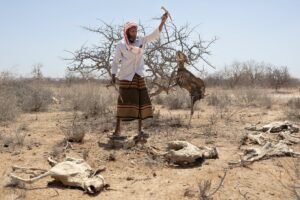
Bishar Maalim Mohammed recounts how he had to burn 130 dehydrated animals, his entire fortune, to keep hyenas from getting too close to his home. โ€œI’m left with nothing,โ€ he says sadly, with only four chickens to look forward to.

The 60-year-old lives in Tawakal, a village in the arid county of Mandera, which borders Somalia to the east and Ethiopia to the north. Since May, virtually no rain has fallen. This is a disaster for the local communities, which are mainly pastoral.

The only bull still alive in Tawakal can no longer stand up and has been lying in the same spot for nearly a week. His bones protrude from under his skin. His owner looks at him, helpless.

โ€œThere is no more water,โ€ โ€œwe have no more food,โ€ laments Bishar Maalim Mohammed. โ€œWe are in danger.โ€

In the nearby town of Banisa, the large water reservoir has dried up, leaving a vast barren expanse that children now use as a playground.
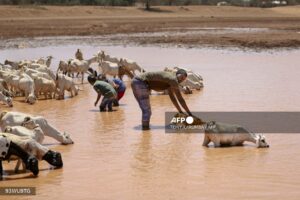
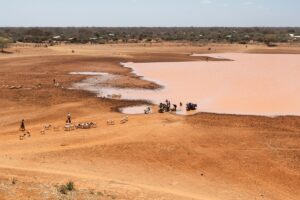
A young man fetches water in jerrycans for domestic use from a rapidly drying waterpan, the only remaining source of water for the communityย’s livestock, in Lulis village near Banissa, on January 20, 2026. In drought-hit northeastern Kenya, villagers have been forced to drag their dead livestock to distant fields for burning to keep the stench of death and scavenging hyenas away from their homes.
Mandera county along Kenya’s borders with Ethiopia and Somalia, has seen no rain since May and is now on the point of a full-blown water emergency. (Photo by Tony KARUMBA / AFP)
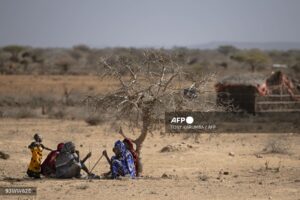
Women seek shelter from the mid-morning sun under dry scrub near Rhamu, on January 21, 2026. In drought-hit northeastern Kenya, villagers have been forced to drag their dead livestock to distant fields for burning to keep the stench of death and scavenging hyenas away from their homes.
(Photo by Tony KARUMBA / AFP)
Abdirizak Gabow, 63, gathers goat carcasses from the surrounding bush into a cluster to be burned later for sanitation purposes in Hawara village near Rhamu town, on January 21, 2026. In drought-hit northeastern Kenya, villagers have been forced to drag their dead livestock to distant fields for burning to keep the stench of death and scavenging hyenas away from their homes.
ย (Photo by Tony KARUMBA / AFP)
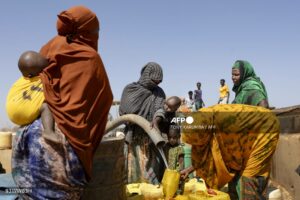
Villagers fetch water in jerrycans at a relief-water delivery point run by the Kenya Red Cross in Hawara village near Rhamu town, on January 21, 2026. In drought-hit northeastern Kenya, villagers have been forced to drag their dead livestock to distant fields for burning to keep the stench of death and scavenging hyenas away from their homes.
(Photo by Tony KARUMBA / AFP)

– Rationing –

The town now depends on a smaller reservoir in the village of Lulis, but its water level is falling dangerously low.

Herds of goats, cows, and camelsโ€”some of which have traveled up to 30 kilometersโ€”jostle for access to the remaining water, which the authorities are rationing in order to prolong reserves.

โ€œIn two weeks, this water will be gone,โ€ says Aden Hussein, a resident of Lulis, interviewed by AFP. โ€œWe are in a very bad situation,โ€ says the 40-year-old man.

More than 2 million Kenyans (out of a population of around 53 million) are facing increasing food insecurity after rainfall deficits between October and December, according to the National Drought Management Authority (NDMA).

According to the Famine Early Warning Systems Network (FEWS Net), an organization that monitors food security, between 20 and 25 million people in Kenya, Somalia, and Ethiopia are in need of humanitarian food aid, more than half of them due to drought.

Faced with this situation, hospitals in Mandera County are overwhelmed. In Banisa, the influx of severely malnourished children, some of whom come from Ethiopia, has overwhelmed the pediatric ward.

During a recent visit, eight children admitted were suffering from severe malnutrition. A 32-month-old girl weighed only 4.5 kg. Another child had just been readmitted after returning to his parents, where there was no food.

โ€œCases of malnutrition are increasingโ€ because the children were โ€œdepending solely on goat’s and camel’s milk, but there is none left,โ€ says Khalid Ahmed Wethow, a hospital nutritionist in Banisa.

The hospital has only eight boxes of therapeutic milk left for its pediatric unit. That is barely enough to last a week.

โ€œMay God save them!โ€

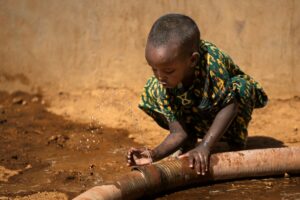
A young girl drinks from a spray leaking from a punctured hose used by a water truck crew delivering water aid to villagers and their livestock, in Hawara village near Rhamu, on January 21, 2026. In drought-hit northeastern Kenya, villagers have been forced to drag their dead livestock to distant fields for burning to keep the stench of death and scavenging hyenas away from their homes.
(Photo by Tony KARUMBA / AFP)
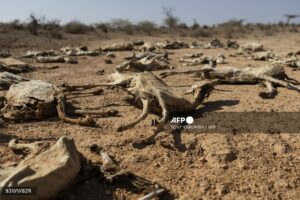
A cluster of goat carcasses lies by the roadside in Jabi-bar village near Rhamu town, on January 21, 2026. In drought-hit northeastern Kenya, villagers have been forced to drag their dead livestock to distant fields for burning to keep the stench of death and scavenging hyenas away from their homes.
(Photo by Tony KARUMBA / AFP)
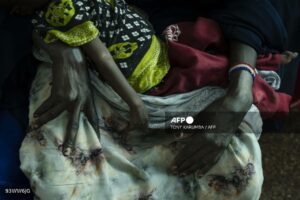
A mother sits with her child in a ward for severely malnourished children at Banissa Sub-County Referral Hospital in Banissa, on January 20, 2026. In drought-hit northeastern Kenya, villagers have been forced to drag their dead livestock to distant fields for burning to keep the stench of death and scavenging hyenas away from their homes.
(Photo by Tony KARUMBA / AFP)

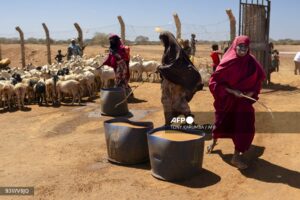
Women herders prepare buckets of water for their remaining goats near a drying water pan, the only source of water for residents and their livestock, in Lulis village near Banissa, on January 20, 2026. In drought-hit northeastern Kenya, villagers have been forced to drag their dead livestock to distant fields for burning to keep the stench of death and scavenging hyenas away from their homes.
(Photo by Tony KARUMBA / AFP)

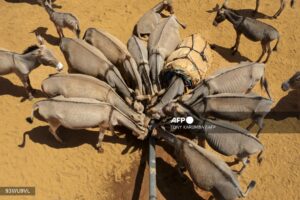
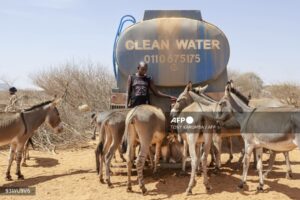
Donkeys gather to drink water from a small pail at a relief truck delivering water aid to villagers and their livestock in Banissa, on January 19, 2026. In drought-hit northeastern Kenya, villagers have been forced to drag their dead livestock to distant fields for burning to keep the stench of death and scavenging hyenas away from their homes.
Mandera county along Kenya’s borders with Ethiopia and Somalia, has seen no rain since May and is now on the point of a full-blown water emergency. (Photo by Tony KARUMBA / AFP)

Until recently, the department depended on the World Food Programme (WFP) for food supplements for infants and nursing mothers. But sharp cuts in international aid in recent monthsโ€”particularly from the United States and the EUโ€”have forced the UN agency to reduce its assistance. The hospital has not received anything for six months.

If the drought persists, โ€œour children will be the next to die,โ€ fears Bishar Mohamed, who is not related to his namesake mentioned earlier.

Having lost 170 goats, he tried to โ€œflee in search of better places, but without success.โ€ โ€œWe are thirsty,โ€ he sighs, before pointing to the field where the carcasses of his animals lie.

In the nearby village of Jabi Bar, more than half of the students have left, most with their parents, and today, โ€œonly 99 remain,โ€ says school principal Ali Haji Shabure.

The Kenyan government and humanitarian organizations such as the Red Cross have stepped up the distribution of water by truck, food aid, and cash transfers to relieve the population, but the needs remain immense.

Bishara Maalim anxiously awaits the next rainy season, expected in April. She prays for her ten children: โ€œMay God save them.โ€

Humaniterre with AFP

Download

the online magazine

In the spotlight

โ€œ๐ˆ ๐›๐ž๐ ๐ ๐ž๐ ๐ญ๐ก๐ž๐ฆโ€: ๐†๐ฎ๐ข๐ง๐ž๐š๐ง ๐ฆ๐จ๐ญ๐ก๐ž๐ซ ๐๐ž๐ฉ๐จ๐ซ๐ญ๐ž๐ ๐Ÿ๐ซ๐จ๐ฆ ๐๐ž๐ฅ๐š๐ซ๐ฎ๐ฌ ๐ฐ๐ข๐ญ๐ก๐จ๐ฎ๐ญ ๐ก๐ž๐ซ ๐›๐š๐›๐ฒ

‘๐ˆ ๐ค๐ง๐จ๐ฐ ๐ญ๐ก๐ž ๐ฉ๐š๐ข๐ง’: ๐๐š๐ซ๐ก๐š๐ฆ ย ๐’๐š๐ฅ๐ข๐ก- ๐ž๐ฑ-๐ซ๐ž๐Ÿ๐ฎ๐ ๐ž๐ž ๐ญ๐š๐ค๐ž๐ฌ ๐จ๐ฏ๐ž๐ซ ๐š๐ฌ ๐”๐๐‡๐‚๐‘ ๐œ๐ก๐ข๐ž๐Ÿ

OTHER ITEMS

Carnets de routes

Culture/loisirs/รฉvรจnements

Similar items

Pas de pauvretรฉ

ร‰liminer la pauvretรฉ sous toutes ses formes et partout dans le monde.

No poverty

End poverty in all its forms and everywhere.

Faimยซzeroยป

ร‰liminer la faim, assurer la sรฉcuritรฉ alimentaire, amรฉliorer la nutrition et promouvoir l’agriculture durable.

Zero hunger

ร‰liminer la faim, assurer la sรฉcuritรฉ alimentaire, amรฉliorer la nutrition et promouvoir l’agriculture durable.

Bonne santรฉ et bien-รชtre

Assurer une vie saine et promouvoir le bien-รชtre pour tous ร  tout รขge.

Good health and well-being

Ensure healthy lives and promote well-being for all at all ages

Education de qualitรฉ

Assurer une รฉducation de qualitรฉ exclusive et รฉquitable et promouvoir les possibilitรฉs d’apprentissage tout au long de la vie pour tous.

Quality education

Ensure exclusive and equitableย  quality education and promote lifelong learnig opportunities for all.

รฉgalitรฉ entre les sexes

Assurer l’รฉgalitรฉ des sexes et l’autonomisation de toutes les femmes et les filles.

Gender equality

Achieve gender equality and empower all women and girls.

Eau propre et assainissement

Assurer la disponibilitรฉ et la gestion durable de l’eau et de l’assainissement pour tous.

Clean water and sanitation

Ensure availability and sustainable management of water and sanitation for all.

Energie propre et Dโ€™un coรปt abordable

Assurer l’accรจs ร  une รฉnergie abordable, fiable, durable et moderne pour tous.

Affordable and clean energy

Ensure access to affordable, reliable, sustainable and modern energy for all.

Travail dรฉcent et croissance รฉconomique

Promouvoir une croissance รฉconomique soutenue, inclusive et durable, le plein emploi productif et un travail dรฉcent pour tous.

Decent work and economic growth

Promote sustained, inclusive and sustainable economic growth, full and productive employment and decent work for all.

Industrie, innovation et infrastructure

Construire des infrastructures rรฉsilientes, promouvoir une industrialisation inclusive et durable et encourager l’innovation.

Industry, innovation and infrastructure

Build resilient infrastructure, promote inclusive and sustainable industrialization and foster innovation.

Inรฉgalitรฉs rรฉduites

Rรฉduire les inรฉgalitรฉs entre les pays et au sein des pays.

Reduced inequalities

Reduce inequalities among and within countries.

Ville et communautรฉs durables

Rendre les villes et les รฉtablissements humains inclusifs, sรปrs, rรฉsiliants et durables.

Sustainable cities and communities

Make cities and human settlements inclusive, safe, resilient and sustainable.

Consommation et production responsable

Assurer des modes de consommation et de production durables.

Responsible consumption and production

Ensure sustainable consumption and production patterns.

Mesure relatives ร  la lutte contre les changements climatiques

Prendre des mesures urgentes pour lutter contre le changement climatique et ses impacts.

Climate action

Take urgent action to combat climate change and its impacts.

Vie aquatique

Conserver et utiliser durablement les ocรฉans, les mers et les ressources marines pour le dรฉveloppement durable.

Life below water

Conserve ans sustainably use the oceans, seas and marine resources for sustainable development.

Vie Terrestre

Protรฉger, restaurer et promouvoir l’utilisation durable des รฉcosystรจmes terrestres, gรฉrer durablement les forรชts, lutter contre la dรฉsertification, stopper et inverser la dรฉgradation des sols et mettre un terme ร  la perte de biodiversitรฉ.

Life on land

Protect, restore and promote sustainable use of terrestrial ecosystems, sustainably manage forests, combat desertification and halt and reverse land degradation and halt biodiversity loss.

Paix, justice et institutions efficaces

Promouvoir des sociรฉtรฉs pacifiques et inclusives pour le dรฉveloppement durable, assurer l’accรจs ร  la justice pour tous et mettre en place des institutions efficaces, responsables et inclusives ร  tous les niveaux.

Peace, justice, and strong institutions

Promote peaceful and inclusive societies for sustainable development, provide access to justice for all and build effective, accountable and inclusive institutions at all levels.

Partenariats pour la rรฉalisation des Objectifs

Renforcer les moyens de mise en ล“uvre et revitaliser le partenariat mondial pour le dรฉveloppement durable.

Partnerships for the goals

Strenghen the means of implementation and revitalize the global partnership for sustainable development.