Abidjan, Côte d’Ivoire
December 2025
By Roselyne KANDEL
For some time now, one issue has been making headlines around the world and mobilizing the energies and financial resources of security services. That issue is illegal or clandestine immigration. The speech given by US President Donald J. Trump at the United Nations on September 23, 2025, on this subject speaks volumes about the importance of this phenomenon worldwide and the threat it could pose to host countries in the long term due to uncontrolled flows.
What is illegal immigration?


Illegal immigration refers to the entry or stay of a person in a country without complying with the immigration laws in force. This may include entering without a visa or authorization, exceeding the legal length of stay, and using false documents or stolen identities to reside permanently or for an extended period in that country. It is often motivated by factors such as poverty, conflict or war, lack of opportunities, or the desire to join relatives abroad.
What are the consequences?
The effects are manifold and affect migrants, host countries, and countries of origin alike. This is particularly true when migration is massive. Migrants are subject to exploitation and abuse when working illegally, becoming victims of human trafficking and violence. They live in legal uncertainty, which exposes them to all kinds of mistreatment and constant fear of being deported from the host country to their country of origin or any other destination, not necessarily of their choosing, in the event of a check. The health and psychological risks are enormous due to the precarious life they lead and their susceptibility to stress and isolation.
Host countries are under enormous pressure on public services in terms of health, housing, and education. The security challenges this creates are not insignificant. Host countries may be infiltrated by criminal or terrorist networks. Added to this are the social tensions that uncontrolled migration flows can cause for immigrant populations. Stigmatization and the rise of populism, with all its attendant acts of uncontrolled violence, cannot be ruled out.
Unfortunately, countries of origin see this phenomenon as a loss of human capital (intelligence and labor) to host countries, a strengthening of networks of smugglers and traffickers of all kinds, and a weakening of trust in institutions.
An insidious and growing threat to host countries?
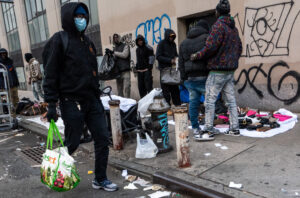
Thus, due to its security, economic, social, and political implications, illegal immigration can pose a threat to the stability of host countries on several levels. Unregulated immigration facilitates the entry of unverified individuals, increasing the risks associated with transnational crime and terrorism. Often victims of human trafficking networks, as mentioned above, illegal migrants fuel criminal activities and jeopardize public safety. Whether we want to admit it or not, their presence destabilizes the labor market, as they accept low-wage jobs, thereby driving down working conditions and creating unfair competition for local workers.
Unplanned expenditure on public services (health, education, housing) generates additional costs for the state, especially when these migrants do not contribute to the tax system, as they are illegal and therefore unknown to the official tax authorities. Even though in some countries, taxation does not depend solely on migration status, but above all on economic presence and the ability to generate income. This is a paradox that means that an illegal migrant can contribute to the tax system without being legally recognized. This is yet another reason to avoid this status.
Social and cultural challenges should not be overlooked. Without legal status, migrants often live on the margins of society, which promotes their exclusion, creates community tensions, and leads to the development of informal or lawless areas. Furthermore, it is worth highlighting cases of apparent non-integration, generally resulting from linguistic or cultural barriers, complex administrative procedures, or social issues, where it is noted that despite efforts to integrate, trauma and practical difficulties (loss of family, precariousness, refusal to hire) hinder adaptation. These are systemic obstacles. In these cases, it is more accurate to speak of hindered integration or delayed integration, depending on the context. All of this undermines national identity and social cohesion, raising concerns about the preservation of cultural values and national unity, especially in times of economic or political crisis.
How can this phenomenon be curbed?
The fight against mass illegal immigration cannot be limited to repression. It requires a comprehensive and balanced approach. Above all, it requires prevention in the countries of origin. In terms of prevention, in addition to awareness campaigns, it is important not to neglect aspects relating to the creation of stable and viable jobs, enabling meaningful integration into socio-professional life at the right time, meaningful socio-economic reintegration when necessary, or viable local economic opportunities.
Factors linked to the destabilization of countries of origin must be taken into consideration. Armed conflicts and wars (Afghanistan, Syria, Libya, Iran, Irak, etc.) have caused massive population displacements, often to Europe or neighboring countries. People have fled violence, insecurity, and the destruction of infrastructure. The collapse of states or political regimes (the disappearance of the Soviet Union led to instability in several Eastern European countries, encouraging migration to the West), economic and social crises (conflicts have weakened local economies, created massive unemployment, and destroyed public services, pushing young people to seek opportunities elsewhere), and internal rebellions (in Côte d’Ivoire, for example, the political and military crisis of the 2000s generated waves of departures, particularly to Europe and neighboring countries, as insecurity and national division made the future uncertain) do not facilitate the prevention of massive illegal immigration.
Strengthening governance and transparency by eliminating parallel networks of corruption is one aspect that promotes the strengthening of the national socioeconomic fabric. Border control, through appropriate bilateral and regional cooperation on border security, surveillance technology, and the fight against smuggling networks, helps to strengthen prevention.
Beyond these aspects, it is worth exploring legal and alternative routes and reinforcing them with circular migration programs, professional mobility agreements, and protection for refugees and asylum seekers after careful and thorough analysis of each case, as each case is different.
Communication on this subject and the perception of potential candidates could play a major role. Côte d’Ivoire has combined local awareness-raising actions (NGOs, agencies) and international programs (IOM, EU) to combat illegal immigration. These campaigns illustrate a communication strategy that plays on fear of danger, but also on promoting local alternatives. While it is necessary to debunk myths about immigration, it is equally important to promote legal migration pathways by involving the media and community leaders. Unfortunately, these campaigns, although useful, come up against deep-rooted local realities, as they are often out of step with the reality on the ground.
What should we remember?
In any case, large-scale illegal immigration is often a symptom of deep inequalities between host countries and countries of origin. This is reality. The destabilization of countries of origin is a direct and documented cause of illegal immigration. Curbing it also means working towards a more equitable world, where migration is no longer an act of survival, but an informed choice, motivated by reliable data and information.
Illegal immigration can be an insidious, growing threat by quietly undermining security, economy, and social fabric if unchecked. But it’s not inevitable doom. Proactive borders, legal reforms, and addressing root causes in countries of origine mitigate it. Host countries like the United States of America (USA), European nations, or even Côte d’Ivoire (facing West African flows) must weigh enforcement against humanitarianism. Awareness of the impact of mass immigration in host countries and countries of origin has already begun to grow.
Coming soon : Success stories and worrying examples in the fight against illegal immigration
Roselyne Kandel
Photo Credits : AFP /Getty