Abidjan, Ivory Coast
By Marietou Bâ
Thousands of miles away from France, where the Bétharram religious congregation is at the center of a scandal involving physical and sexual abuse, an independent commission of inquiry set up in response to the case fears that there may be “a significant number” of victims in Ivory Coast, where priests have stayed
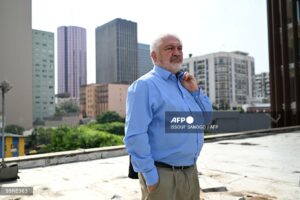
According to the commission’s president, Jean-Pierre Massias, who visited Côte d’Ivoire at the end of February, six people of Ivorian nationality or origin reported incidents of sexual assault that they attribute in particular to the priest Bénat Ségur, who was present in the 1970s and 1990s in this former French colony, which gained independence in 1960.
At least one of these individuals has filed a complaint in France, which will not result in legal proceedings because the statute of limitations has expired and Father Ségur, the main defendant in France and abroad, died in 2010.
The number of victims in Côte d’Ivoire “could well increase, because every time we met people here (…) the recurring theme was to say ‘It didn’t just happen to me’,” said Jean-Pierre Massias at the end of his initial interviews in Abidjan.
“We will probably recommend a major investigation into the actions of the Betharram community here.”
In March 2025, the Congregation of the Sacred Heart of Jesus in Betharram, France, acknowledged its “responsibility” for the physical and sexual abuse reported in nearly 250 complaints filed by former students of a middle and high school over a period of more than two years, but did not comment on the situation in Ivory Coast.
The congregation is providing €120,000 in funding over 12 months for this independent commission of inquiry, led by the Institut Louis Joinet (IFJD), a French NGO specializing in restorative justice chaired by Mr. Massias.
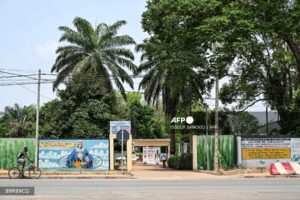
The Betharram Congregation has been present in Ivory Coast since 1959. Its Ivorian headquarters are located on the outskirts of Abidjan, in the village of Adiopodoumé.
Bénat Ségur, a Basque priest, stayed in the country twice. First, to train until 1971 in Ferkessedougou, then in Katiola (north), where he later became director of a priesthood training institution, according to the congregation’s website.
After serving as director of the Notre-Dame-de-Bétharram college in Pau (southwest France), he returned to Côte d’Ivoire from 1990 to 1994, to the Saint-Bernard parish in Adiopodoumé, located opposite the congregation.
Some Ivorian victims came forward after the commission issued a call for testimonies. Several spoke about the events for the first time, according to Jean-Pierre Massias.
– “Accusing a priest, a white man, a man” –
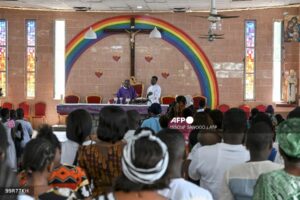
When he held religious office at the Saint-Bernard parish in Adiopodoumé, Bénat Ségur had a “special presence,” says Jean-Pierre Massias: he “was very involved in the basketball club” and was “described as being very cordial, very cheerful, very warm” with children and “sends them gifts from France.”
Today, the victims report “systematic touching of their genitals,” according to Mr. Massias. Others denounce “clear attempts at rape.”
The commission president sees in Ivory Coast “an even stronger domination of children by priests,” linked among other things to “the post-colonial dimension.” According to him, victims tell him that “you can’t accuse a priest, you can’t accuse a white man, you can’t accuse a man, and if you did, the community wouldn’t believe us; on the contrary, (it) would accuse us.”
The Ivorian religious authorities, whom Mr. Massias met with, say they are unaware of the facts.
“There were children living with priests,” and “sometimes, certain people would tell the children to ‘be careful,'” Mr. Massias points out.
Furthermore, in Ivory Coast, “the level of awareness has not reached that which we see today in Europe,” where numerous sexual abuse scandals have been revealed, he says.
Added to this is “a kind of conflation between pedocriminal violence, homosexuality, and priestly celibacy” in this conservative country, he explains.
Jean-Pierre Massias also learned of “the presence of French nationals” who lived in the 1990s in a village near the congregation’s headquarters in Ivory Coast, with “young boys whom he had adopted,” without further information at this time.
More broadly, the commission intends to examine the presence of the Betharram congregation in all former French colonies in Africa, the Maghreb, and Central Africa, where two locations for investigation have already been identified.
Priest Bénat Ségur also underwent pastoral training in what is now Burkina Faso.
Following their testimony, the Ivorian victims will be able to receive compensation, like the French victims, through another commission.
Humaniterre with AFP
Photo credit : Issouf SANOGO